When buying a battery or a power bank, you may have noticed the term “mAh” on the label. But what does mAh on a battery mean? Understanding this unit is crucial when selecting the right battery or power bank for your device. In this article, we will break down what mAh is, how it relates to battery performance, and how to choose the right power bank for your needs.
What Does mAh on a Battery Mean?
The abbreviation “mAh” stands for milliampere-hour. It is a unit that measures the electric charge a battery can store. The higher the mAh rating, the more energy a battery can hold, which typically translates to longer usage time before requiring a recharge.
For example, a 5000mAh battery theoretically provides 5000mA (or 5A) of current for one hour, or 1000mA (1A) for five hours. However, actual performance may vary due to efficiency losses and other factors.
mAh is a crucial specification in batteries for smartphones, laptops, power banks, and other portable electronics, as it directly affects how long a device can run on a single charge.
How mAh Relates to Battery Performance
mAh plays a critical role in determining battery performance. Here’s how:
- Longer Battery Life: Higher mAh generally means longer battery life, assuming the device’s power consumption remains the same.
- Power Consumption Matters: A device consuming more power will drain a high-mAh battery faster than a device with lower power consumption.
- Battery Size Considerations: Higher mAh batteries are often larger and heavier, which may impact portability.
- Charging Time: Batteries with higher mAh take longer to charge unless fast-charging technology is supported.
- Efficiency Losses: Batteries lose some energy due to heat and internal resistance, so real-world performance may be lower than theoretical estimates.
How Is mAh Calculated?
To estimate battery life, you can use this simple formula:
Battery Life (hours) = Battery Capacity (mAh) / Device Consumption (mA)
For example, if a smartphone has a 4000mAh battery and consumes 500mA per hour, it will last approximately 8 hours:
4000mAh / 500mA = 8 hours
However, real-world usage varies due to factors like screen brightness, background apps, battery efficiency, and operating temperature. Additionally, some devices may have power-saving modes that extend battery life beyond basic calculations.
mAh in Different Battery Types and Sizes
Different battery chemistries and sizes have varying mAh ratings. Here are common types:
- Lithium-ion (Li-ion): The most common rechargeable battery type in smartphones, laptops, and power banks, offering high energy density and longer lifespan.
- Nickel-Metal Hydride (NiMH): Found in rechargeable AA/AAA batteries, typically lower mAh than Li-ion but more environmentally friendly.
- Lithium-Polymer (Li-Po): A variant of Li-ion, used in thin devices like tablets and smartwatches due to its flexible shape and lightweight design.
- Lead-Acid: Used in automotive applications and uninterruptible power supplies (UPS), offering much higher capacity ratings but lower energy density.
Larger batteries generally have higher mAh ratings, but the voltage and energy density also impact overall performance.
mAh vs. Wh: Difference Between mAh and Wh
While mAh measures capacity, watt-hour (Wh) measures energy. The formula to convert mAh to Wh is:
Wh = (mAh × Voltage) / 1000
For example, a 5000mAh battery at 3.7V has:
(5000 × 3.7) / 1000 = 18.5Wh
When comparing batteries, Wh provides a better measure of actual energy stored.
How to Choose the Right Power Bank Based on mAh
When selecting a power bank, consider:
- Device Compatibility: Ensure the power bank’s output voltage and ports match your device’s input.
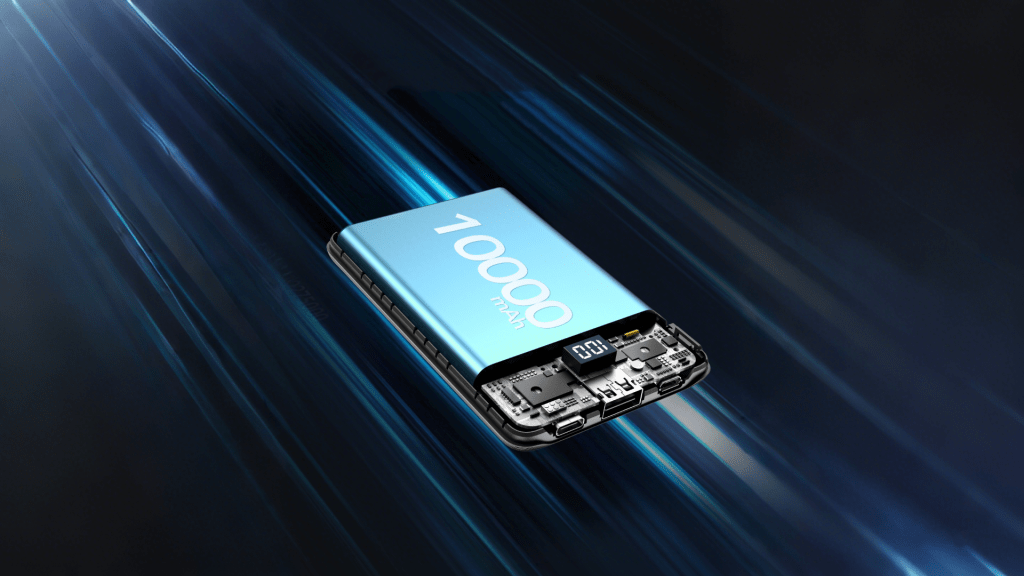
- Capacity Needs: A 10000mAh power bank can charge a 2500mAh phone around 3 times, while a 20000mAh power bank can charge it around 6 times.
- Portability: Higher mAh means bigger and heavier power banks. A 20000mAh model is ideal for extended travel, while a 5000mAh model is better for daily use.
- Fast Charging: Look for power banks that support Quick Charge (QC) or Power Delivery (PD) for faster recharging times.
- Additional Features: Some power banks include wireless charging, multiple USB ports, or built-in cables for added convenience.
Utopia is a leading provider of power banks, offering OEM/ODM services for businesses looking to customize their products. With a catalog of over 200 ready-to-brand power banks, businesses can choose from a wide range of designs and specifications without the need for product development.
- OEM Services: Customize branding, packaging, and minor design tweaks to existing power banks.
- ODM Services: Full customization, including unique mold designs, technical specifications, and exclusive features.
- Bulk Production & Fast Delivery: With an efficient manufacturing process, Utopia ensures timely production and delivery for bulk orders.
Whether you need a custom-branded power bank or a fully unique product design, Utopia has the expertise to meet your business needs efficiently and reliably.
FAQs about mAh Battery
Q1: Is a Higher mAh Battery Better?
Higher mAh batteries last longer per charge but may take longer to recharge and be larger in size.
Q2: Which Is Better: 10000mAh or 20000mAh?
It depends on your needs. A 10000mAh power bank is more portable, while a 20000mAh power bank provides more recharges but is bulkier.
Q3: Does Higher mAh Mean Longer Battery Life?
Yes, but only if the device’s power consumption remains constant. Other factors like efficiency and usage habits also affect battery life.
Conclusion
Understanding what mAh means is essential for selecting the right battery or power bank. While higher mAh generally means more power, other factors like voltage and energy consumption also play a role. If you need customized power banks, Utopia’s OEM/ODM service offers tailored solutions for bulk orders. Choose wisely to ensure your devices stay powered when you need them most.

 UTOPIA | OEM/ODM Power Bank Manufacturer